
How to choose online NDT training: check the evidence
Choose online NDT training by checking what you can inspect before paying: the syllabus, a working lesson sample, the training-hour basis, example completion records and enrollment terms. Then have the organization responsible for your qualification confirm whether the course fits your requirements. A course title and a price do not answer those questions.
Match the syllabus to a defined requirement
This checklist is for comparing providers and course options. If you are still choosing your first method, begin with how to start NDT training, then return here with a specific course to evaluate.
Write the intended method, level and technique at the top of your comparison. Ask which standard edition or certification program applies and who will accept the training. Under an SNT-TC-1A-based program, the employer's written practice governs its qualification and certification process.
Compare actual lesson topics, rather than counting logos or standard names on a sales page. For a UT course, for example, look for the examination topics relevant to your planned work and ask how the course develops the needed understanding. A method name alone does not tell you which techniques receive detailed treatment.
Separate instructor credentials, training-organization accreditation and the student's eventual certification. ASNT's ATO program evaluates training organizations; an instructor's personal ASNT credential is a different thing. Verify an accreditation claim with its issuer and applicable scope.
Sources: ASNT's employer-certification explanation; ASNT ATO program.
Use a sample to judge the teaching
Open a lesson on the device you intend to study with. Read the explanation, inspect its figure and try its activity. Ask whether the material helps you explain a decision in your own words.
A useful example is penetrant removal. After studying the sample, can you explain why removing background is necessary and why excessive washing can weaken an indication? The point is to evaluate what you learn from the explanation, not whether an animation looks impressive.
NDT Academy's public MT, PT and UT samples combine selected reading, an explainer and an interactive teaching model. They let you try the format before opening an account. Look for readable labels, useful feedback and a clear way to recover when you make a mistake.
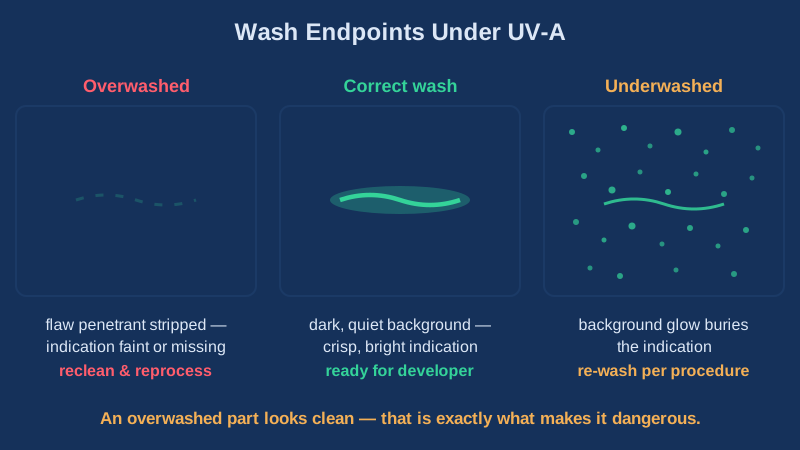
Sources: ASNT's penetrant-process explanation.
Inspect the hour basis and the records
Ask what the advertised hours represent, how training participation is recorded and what you receive after completion. Do not assume that an estimated video duration, an access period and documented formal training time mean the same thing.
Request an example certificate and transcript. Look for the method, course level, training basis, dates and a clear description of what the record establishes. Keep records that support later review: ASNT highlights the problems that arise when a technician has a certificate but cannot produce the underlying training and experience documentation.
Review NDT Academy's sample certificate, transcript and employer packet. These examples are deliberately marked invalid and contain no real learner's results. Compare them with the evidence your employer requests before deciding to enroll.
Sources: ASNT on qualification records.
Confirm what happens outside the online course
Ask where you will gain supervised equipment experience and who will arrange any required practical assessment. Make sure the answer describes your actual qualification path. For international learners, confirm the intended certification body, sector and employer requirements rather than assuming that English-language access means acceptance everywhere.
Our training-versus-certification guide explains the different records and responsibilities. Use it to make a gap list of what remains after the course instead of expecting one purchase to complete the entire process.
Compare the terms before comparing the total price
Two similar-looking offers may cover different levels or access periods. Check the selected option and ask about required references, equipment, external examinations and anything priced separately. Read when the access period begins, what “lifetime” refers to, and which activities affect refund eligibility.
Also check identity-verification requirements and how to request learning or technical help. A useful pre-enrollment message is specific: “I need this method and level under this program; here is my existing training record. Which course option addresses the remaining training, and what documentation will I receive?”
Use the course catalog to compare published options, then bring the evidence to your reviewer. Choose the course you can explain and document, with a clear place in the training plan you actually need.
| Check before purchase | Evidence to keep |
|---|---|
| Course matches the intended method, level and program | Syllabus and the accepting organization's response |
| Teaching works on your device and in your study language | Notes from a real lesson sample |
| Training hours and completion records are understandable | Published hour basis and example records |
| Remaining practical and qualification steps are planned | Your qualification gap list |
| Selected offer and terms are clear | Current course option, access terms and refund policy |
Sources and further reading
- ASNT's employer-certification explanation
- ASNT ATO program
- ASNT's penetrant-process explanation
- ASNT on qualification records
Sources checked on September 6, 2026. Follow the current requirements from your employer or certification body when planning qualification or an examination.